Introduction
Historic sites in Dubai are the foundation of any meaningful cultural trip to the emirate. Dubai is often known for record breaking towers, luxury hotels, and futuristic attractions, but its older districts tell a deeper story. Historic sites in Dubai show how the city grew from a creek side trading settlement into one of the world’s most visited destinations. In 2026, travellers can still walk through restored wind tower lanes, visit traditional homes, explore museums by Dubai Creek, and learn about Emirati life before the oil era. Historic sites in Dubai are ideal for families, culture lovers, photographers, students, and anyone who wants more than shopping malls and skyline views. Historic sites in Dubai also make your itinerary feel more balanced and memorable.
1 🏘️ Al Fahidi Historical Neighbourhood
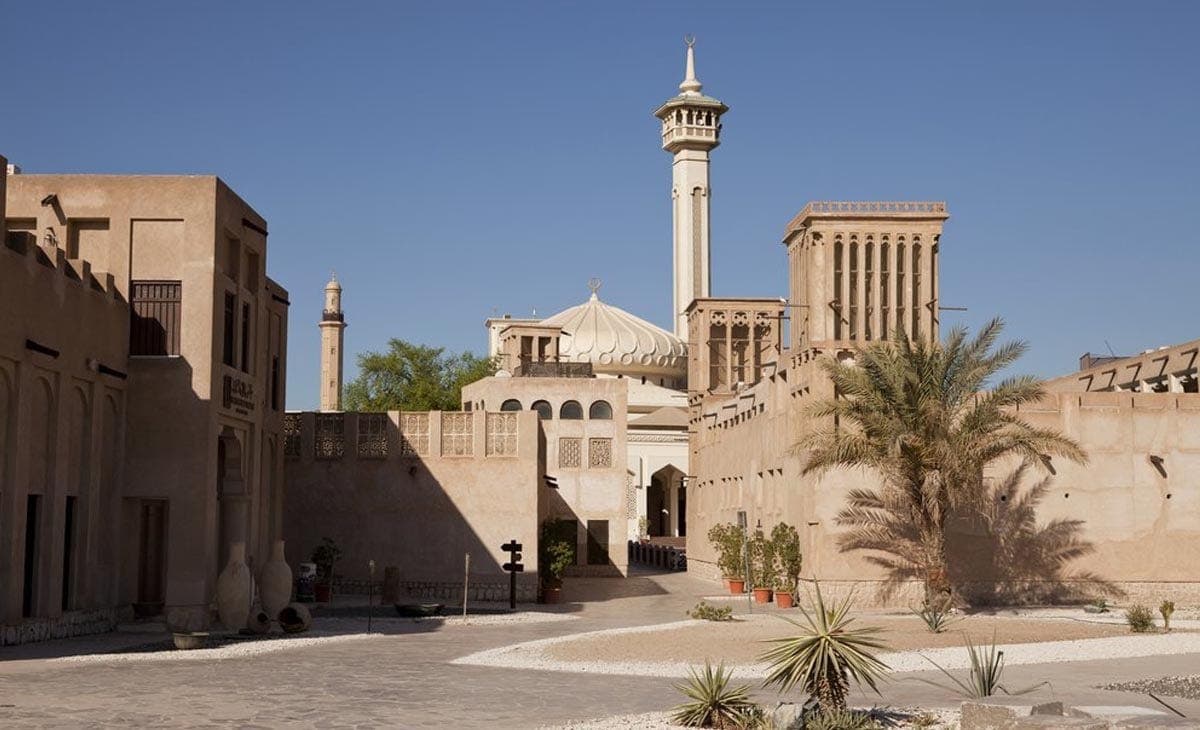
Al Fahidi Historical Neighbourhood is one of the best places to begin your cultural journey. Dubai Culture describes the area as a reflection of traditional life from the mid nineteenth century until the 1970s, with buildings made from materials such as stone, gypsum, teak, sandalwood, palm fronds, and palm wood. Its famous wind towers, narrow lanes, courtyards, galleries, cafes, and museums make it one of the most atmospheric Historic sites in Dubai.
Visitors can explore the area slowly, especially in the morning or late afternoon when the light is softer. Historic sites in Dubai like Al Fahidi are valuable because they show practical desert architecture, not just decorative heritage. The shaded pathways and air towers explain how people lived comfortably before modern cooling.
2 🏛️ Al Shindagha Museum
Al Shindagha Museum sits beside Dubai Creek, one of the city’s most important historic waterways. Visit Dubai describes it as a place where the story of the nation’s past is told through experiences such as Dubai Creek: Birth of a City and the Perfume House. For travellers who want an organized museum experience, this is one of the most complete Historic sites in Dubai.
The museum connects trade, family life, governance, sea culture, perfume traditions, and Emirati identity. Historic sites in Dubai are especially meaningful here because the location itself is part of the story. The creek shaped early trade, pearl diving, boat movement, and settlement patterns.
3 🕌 Jumeirah Mosque
Jumeirah Mosque is a landmark for cultural understanding as well as architecture. Visit Dubai notes that it welcomes non Muslim guests six days a week, while the official mosque visit program says guided visits include cultural discussions and open questions. This makes it one of the most accessible Historic sites in Dubai for visitors who want respectful insight into Islamic and Emirati traditions.
The mosque is known for its elegant stone design and welcoming visit format. Historic sites in Dubai are not only old buildings. Some are living cultural places where visitors can learn etiquette, faith, hospitality, and community values in a guided setting.
4 🏫 Al Ahmadiya School
Al Ahmadiya School is one of Dubai’s most important education landmarks. Dubai Culture states that it was founded in 1912 by Sheikh Ahmed Bin Dalmouk and was the first semi formal private school in Dubai. It continued as a school until 1958 and was restored by the Dubai government in 1994 as a museum.
For people interested in learning, social development, and early urban life, this is one of the most rewarding Historic sites in Dubai. Historic sites in Dubai like Al Ahmadiya School help visitors understand how knowledge, religion, language, and trade shaped the city’s early communities.
5 🏠 Heritage House
Heritage House is located in one of the oldest urban areas of Dubai. Dubai Culture says the house was established by Matar Saeed bin Mazina in 1890 and presents traditional local housing, family life, values, and responses to the desert environment. It is a compact but meaningful stop among Historic sites in Dubai.
Inside, visitors can better understand how older Emirati homes were arranged for privacy, comfort, hospitality, and daily routine. Historic sites in Dubai such as Heritage House are perfect for travellers who want to see the domestic side of history rather than only large monuments.
6 🌴 Majlis Ghorfat Umm Al Sheif
Majlis Ghorfat Umm Al Sheif is a small but special heritage site in Jumeirah. Dubai Culture says it was established in 1955 as the summer retreat of the late Sheikh Rashid bin Saeed. It reflects the traditional majlis culture of meeting, discussion, leadership, and hospitality.
This site is useful for understanding how social spaces worked in old Dubai. Historic sites in Dubai often reveal the importance of gathering rooms, shaded gardens, palm trees, and simple materials. Majlis Ghorfat Umm Al Sheif gives visitors a quieter experience compared with the busier creek side locations.
7 🏔️ Hatta Heritage Village
Hatta Heritage Village offers a different view of Dubai’s history because it is set in the mountain region rather than the city centre. Dubai Culture has hosted heritage activities at Hatta Heritage Village, and Visit Dubai highlights Hatta as a place with rich history, mountain scenery, farms, and cultural experiences.
For 2026 travellers, this is one of the best Historic sites in Dubai to combine with a nature trip. Historic sites in Dubai are not limited to urban areas. Hatta shows mountain life, forts, traditional houses, and the relationship between people, farming, water, and rugged landscapes.
8 🚤 Dubai Creek and Traditional Souk Areas
Dubai Creek is not only a scenic waterway. It is the historic heart of trade, transport, and settlement. Around the creek, visitors can experience abra rides, old market lanes, textile shops, spice trading areas, and views toward Deira and Bur Dubai. These areas remain among the most memorable Historic sites in Dubai because they still feel active and lived in.
A visit to the creek pairs well with Al Fahidi, Al Shindagha Museum, and nearby heritage stops. Historic sites in Dubai around the creek help travellers connect museums with real streets, water routes, merchants, and everyday movement.
Conclusion
The best way to understand Dubai in 2026 is to balance modern attractions with heritage experiences. Historic sites in Dubai reveal the city’s older identity through architecture, education, faith, trade, homes, leadership spaces, and mountain communities. From Al Fahidi and Al Shindagha Museum to Jumeirah Mosque, Heritage House, Al Ahmadiya School, Majlis Ghorfat Umm Al Sheif, Hatta Heritage Village, and Dubai Creek, every stop adds a different layer to the story. Historic sites in Dubai are not just places to visit. They are reminders of how culture, resilience, and community helped shape the city people see today. For any heritage-focused itinerary, Historic sites in Dubai should be treated as essential stops, and Historic sites in Dubai deserve enough time for slow, respectful exploration.
Also Read: Powerful Positive Guide: Average Salary in Dubai 2026 by Job Role